The End of the “Trial and Error” Era in Drug Discovery
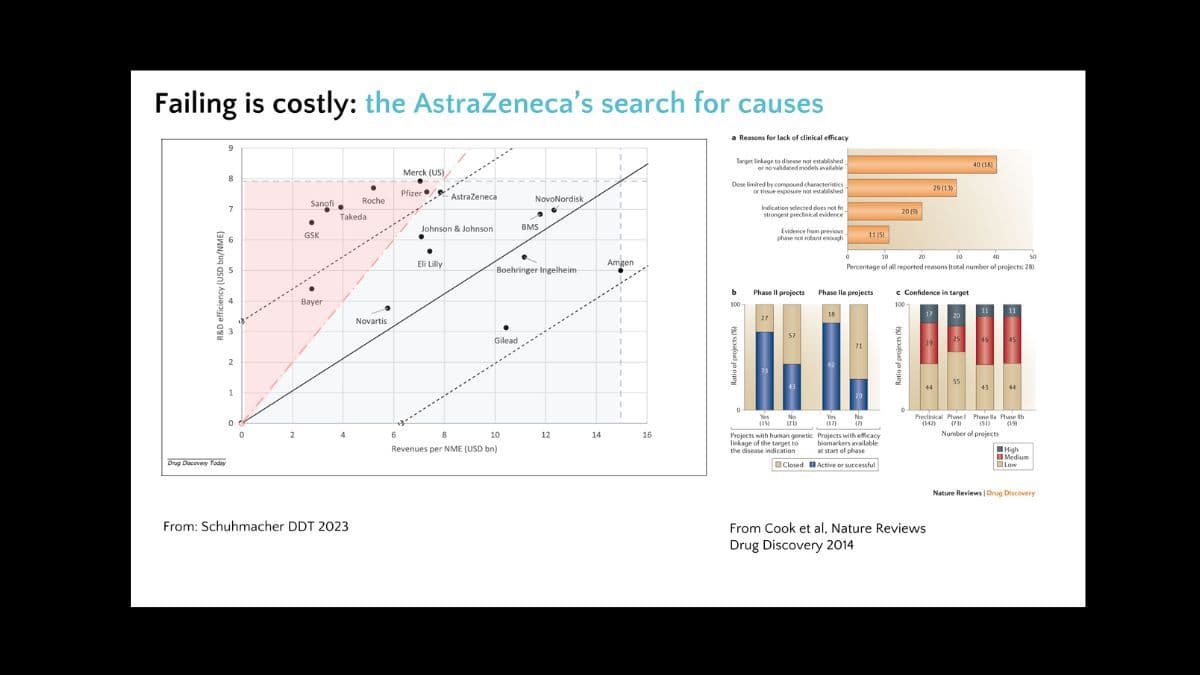
Drug discovery is reaching the end of the “trial and error” era.
As Peter Groenen highlighted in our recent webinar, R&D efficiency has not meaningfully increased in 20 years. The industry is investing more than ever, yet the number of first-in-class FDA approvals remains largely stagnant.
That raises a difficult but necessary question: how long can this model continue?
Why drug discovery efficiency remains stuck
The hard truth is simple. If we continue to find so few drugs for the billions invested, the industry’s long-term sustainability is at risk.
One of the main reasons is often a poor linkage between target and disease. For years, drug discovery has relied heavily on preclinical systems that do not adequately reflect human biology. We have become very good at curing mice, but those models often fail to predict the complexity of human disease.
What needs to change
To move beyond trial and error, drug discovery needs better models, not just more experiments.
That means shifting from poorly characterized animal models toward systems that are:
- Well explored
- Translatable to human biology
- Predictive of real therapeutic response
This is where a more human-relevant approach becomes essential.
How QurieGen closes the gap
At QurieGen, we are working to close this gap by combining our single-cell multi-omics platform with AI Virtual Cell Modeling.
This approach helps simulate real human cellular behavior, rather than relying only on animal proxies. By generating deeper, more predictive biological insight, it becomes possible to better understand disease mechanisms, improve target-to-disease linkage, and support more informed drug discovery decisions.
A more predictive future for preclinical R&D
The future of drug discovery will not be built on trial and error alone. It will depend on models that better capture human complexity and generate insights that are both actionable and translatable.
It is time to stop relying on poorly characterized animal models and start building systems that are better explored, more predictive, and more relevant to human biology.
Access the full webinar recording.